The resistance principle—the idea that growth and order emerge through meeting and responding to resistance—maps elegantly onto the plant kingdom. Plants are living embodiments of this rhythmic, adaptive dialogue.
1. Growth Through Constraint
Root Systems
Roots strengthen by pushing against soil. Resistance-free soil produces weak roots; moderate density creates resilience.
Stems and Trunks
Stems thicken in response to mechanical stress like wind and gravity, a feedback known as thigmomorphogenesis.
2. Rhythmic Adaptation and Oscillation
A plant’s response is rhythmic and cyclic, seen in circadian rhythms, phototropism, and gravitropism. It “listens” and adjusts growth in oscillatory feedback loops.
Limitation becomes a rhythmic dialogue between environment and organism.3. Energy Organization Through Opposition
Photosynthesis is resistance to entropy. By capturing photons and storing energy in chemical bonds, plants defy disorder and organize the pattern of life.
4. Ecological and Evolutionary Resonance
Resistance pressures shape entire ecosystems. Harsh climates yield specialized morphologies (succulents, evergreens), while competition drives the complex architecture of forests.
Resistance, distributed through an ecosystem, becomes the sculptor of biodiversity.Intellectual & Scientific Foundations
This principle stands at the intersection of morphology, biophysics, and philosophy, supported by a rich landscape of thinkers and research.
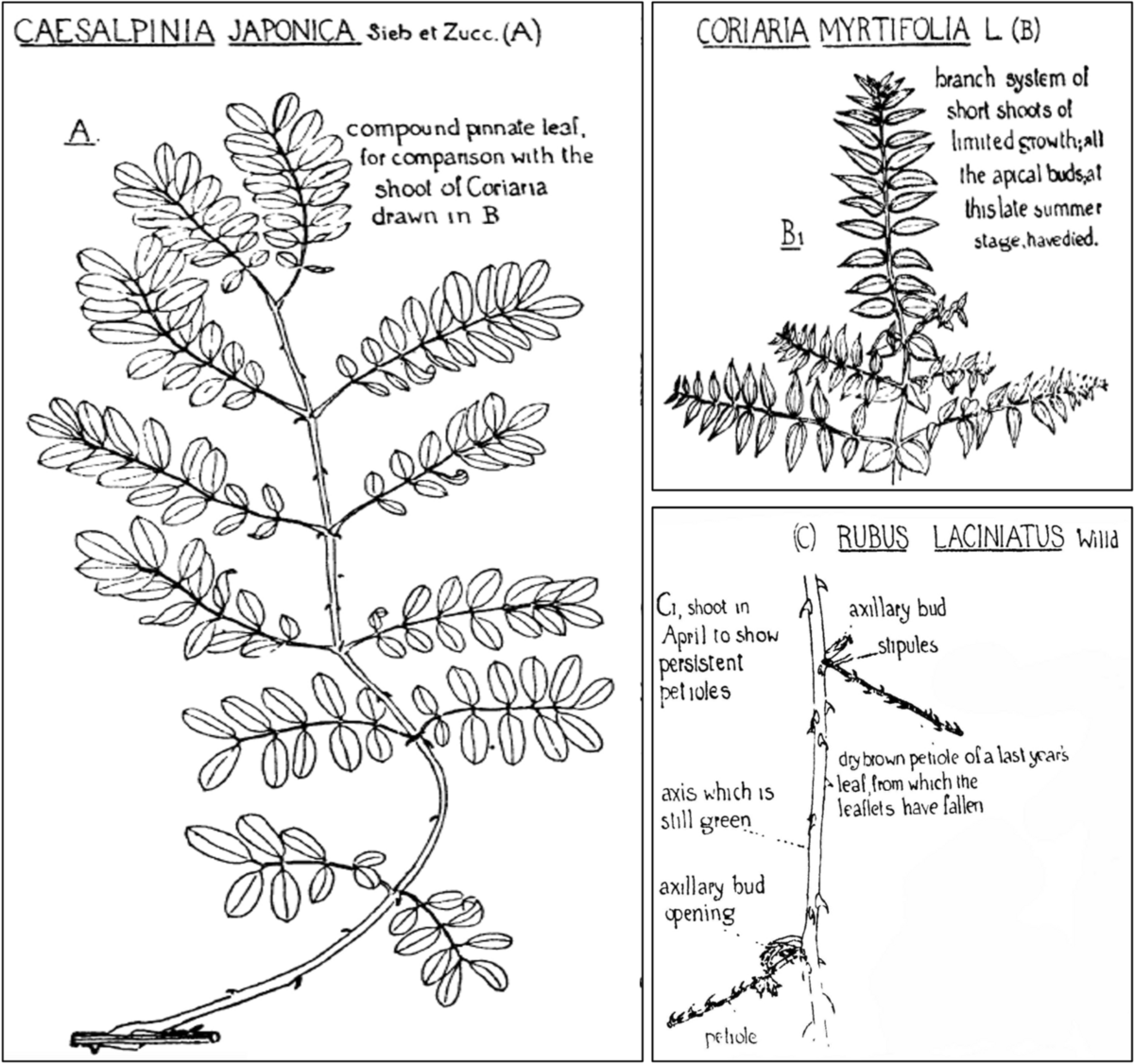
1. Agnes Arber & Plant Morphology
Arber explored how plant forms seem constrained by internal potential, with the environment triggering expression within those limits. This resonates with the resistance/adaptation theme, where an organism's innate possibilities meet external forces.
Takeaway:
The environment is met by an organism’s internal field of potential, aligning with "resistance → higher-order."

2. Rolf Sattler & Process Philosophy
Sattler's work frames plant life as dynamic, processual, and responsive. This view challenges the idea of plants as passive objects and supports the model of systems encountering limitation and adapting rhythmically.
Takeaway:
Plants are active systems in dialogue with resisting forces that trigger adaptation.

3. David Abram & The More-Than-Human World
Abram argues that non-human beings, including plants, participate in meaning and perception. This supports the idea that as resistance is met, not just energy but also "meaning and information are organized" in an ecological field.
Takeaway:
The principle matters beyond mere mechanics; it describes a relational, meaning-making process.

4. Plant Cognition & Agency
A growing field explores plant cognition, behavior, and agency. This research provides a robust foundation for viewing plants as active, responsive systems that don't just endure resistance but actively process and adapt to it.
Takeaway:
Plants are not fixed objects but complex systems capable of responsive adaptation.

5. Thigmomorphogenesis & Biophysics
The literal, physical process where plants change form in response to mechanical stress (like wind or touch) is a direct, empirical validation of the principle. Mathematical models of morphogenesis show how resistance reorganizes structure at a cellular level.
Takeaway:
Empirical biology provides a concrete foundation for the principle's core mechanism.
Synthesis: A Unifying View
The Resistance Principle, applied to botany, integrates these fields. It describes the dynamic process where morphological constraint (Arber) meets environmental resistance (Thigmomorphogenesis), leading to an adaptive response (Sattler, Plant Cognition) that organizes systemic meaning (Abram).
5. Symbolic and Philosophical Reflection
Life does not overcome resistance by eliminating it, but by transforming it into form, rhythm, and coherence.